 Special disposal notes: Only really spreads vegetatively from stem fragments as it doesn’t usually seed in NZ. Hang up cut vegetation off the ground or leave up in vegetation to dry out. Dispose of other cut waste to refuse transfer station. Practice strict weed hygiene
How to Control:
Firstly establish that the species is not a valued native plant.
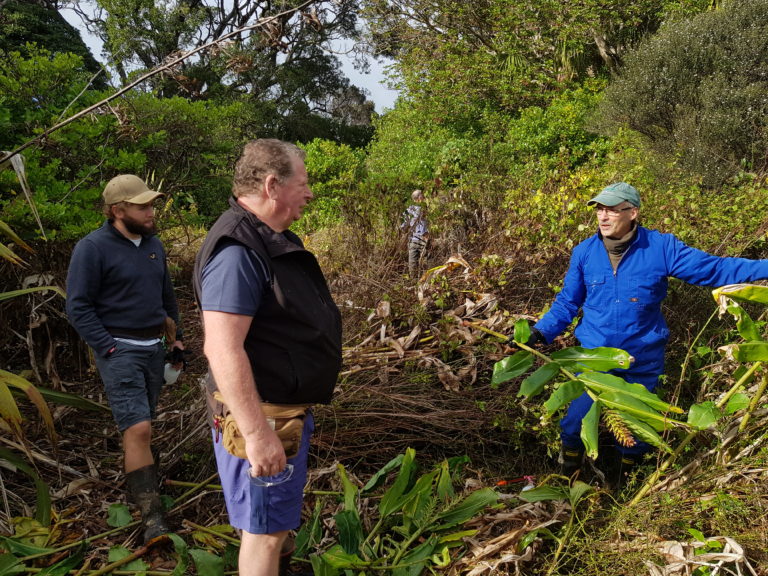
- Hand pull, dig out roots (all year round). Dispose of roots, stems and all stem fragments at a refuse transfer station or bury deeply.
- Cut stump application: Cut and paint larger stems with (100ml glyphosate/1L water) or (1g metsulfuron/1L water). Dispose of ALL cut stems and fragments at a refuse transfer station or bury deeply, or leave hanging in vegeation to dry out.
- Cut hanging vines at waist height & spray areas below this, summer-autumn with (100ml glyphosate + 20mls penetrant/10L water ) or (2g metsulfuron+10ml penetrant/10L water). Follow up to check that slashed stems have not resprouted.
Because no seed is set, this weed can be eliminated from a site very successfully. Limited follow up required. Strict weed hygiene is key as all cut plant material can reprout.
Similar species:
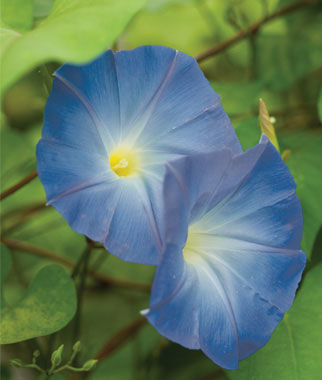
Ensure that the species is not a valued native plant. Native species that are similar include: railway creeper (I. cairica, I. palmate) which has leaves divided into 5-7 finger-like lobes, mauve flowers 5-8 cm diameter, grows in coastal areas and is uncommon, pink bindweed or convolvulus (Calystegia sepium) which has extensive rhizomes, arrow-shaped leaves, flowers pink with white stripes, and is very common, shore bindweed (Calystegia soldanella) which is usually prostrate, has smaller, thick, semi-succulent leaves, 3-5 cm pink flowers, and is coastal, and Calystegia tuguriorum which has slender, much branched, climbing stems, roundish or kidney-shaped leaves, flowers white or pink, 4-6 cm diameter, and grows in lowland forest margins all over New Zealand.
CAUTION: when using any herbicide or pesticide PLEASE READ THE LABEL THOROUGHLY to ensure that all instructions and safety requirements are followed.
Click here for more information on the herbicides referenced in the control methods, or here for more information on the suggested techniques.